Will the Real eCash Please Stand Up?
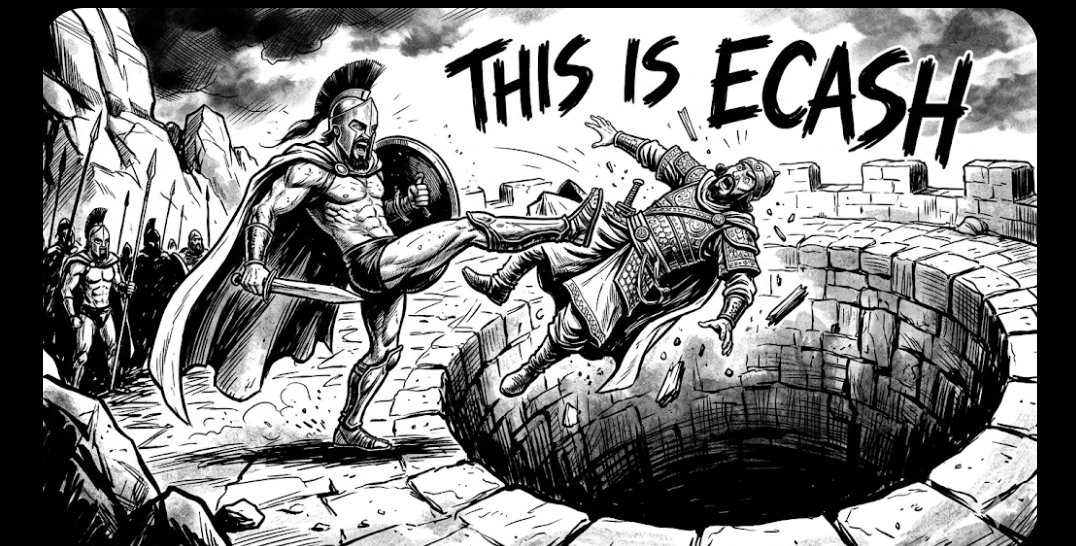
It's 2017 and 2020 all over again. There is a fork of Bitcoin called eCash with a focus on scaling Bitcoin's network to handle worldwide scale. Somehow, this sentence is not referring to the eCash founded by Amaury Séchet as a fork of Bitcoin and Bitcoin Cash in 2020 but is rather a new fork, dubbed the "Stork Fork" after fork initiator Paul Sztorc, that aims to scale Bitcoin through drivechains. So, what is this version of eCash, which has plans to fork in August (Bitcoin block height 964,000), trying to achieve, and how is it different from the existing eCash network? Which is the real eCash?
The August Bitcoin fork is being led by Paul Sztorc to attempt to scale Bitcoin through drivechains, which are sidechains that allow movement of BTC between the main chain and sidechains without changing Bitcoin's base layer. These other chains can operate under their own rules, allowing developers to build on top of Bitcoin without changing the entire network. Most experts, including Amaury Séchet, agree that drivechains are an innovation that does assist with scale.
However, the contentious part of the fork comes from how it is planning to be funded. Paul plans to siphon a portion of the forked eCash coins representing Satoshi Nakamoto's 1.1m Bitcoin to fund the fork. While coins and tokens have been confiscated or recovered on blockchains with centralized control, this confiscation would be the first of its kind on a major Bitcoin-derived blockchain.
The criticism coming from experts is that the entire premise of cryptocurrency is that you may hold and exchange funds in an anonymous, trust-less manner that no one can stop. By being able to redirect those funds, the fork violates those core principles—after all, if one wallet's contents can be redirected, then what is to stop the network from redirecting other wallets? Paul would have to be clear as to how the fork would only be allowed to redirect those funds and never be able to perform that action again.
If that controversy wasn't enough for you, the new fork's name is currently slated to be eCash, with Paul purchasing the ecash.com domain to announce the fork. Supporters of the existing eCash coin, itself a fork of Bitcoin (and, subsequently, Bitcoin Cash), are calling this play an affinity scam, taking to X to fight the duplicate name in the public square. Prominent cryptocurrency advocate John Gotts has gone on the record to state that, if Paul continues using the eCash name, he will work with his foundation and sue Paul over trademark infringement, effectively risking the August fork's launch success by making it difficult to list on exchanges. This shockingly played out in real time on John's podcast episode, DigitalGoldTalk Pod with Amaury & Paul regarding eCash, with insults exchanged and a swift, hostile end to the conversation.
What will happen from here is anyone's guess, but there is no doubt that most people find forking Bitcoin, siphoning Satoshi's holdings in the new fork, and taking an existing cryptocurrency's name and web domain name to be a bold strategy. Will Paul's fork be successful and compete with Bitcoin for cryptocurrency supremacy, or will it launch unceremoniously to no fanfare? Will lawsuits be filed? Which eCash will have a higher market cap on August 21, 2026? Is there any possibility that Paul holds some of the original eCash and is looking to profit from its gains, Satoshi's wallet, and his own fame from announcing this fork? Only time will tell.